
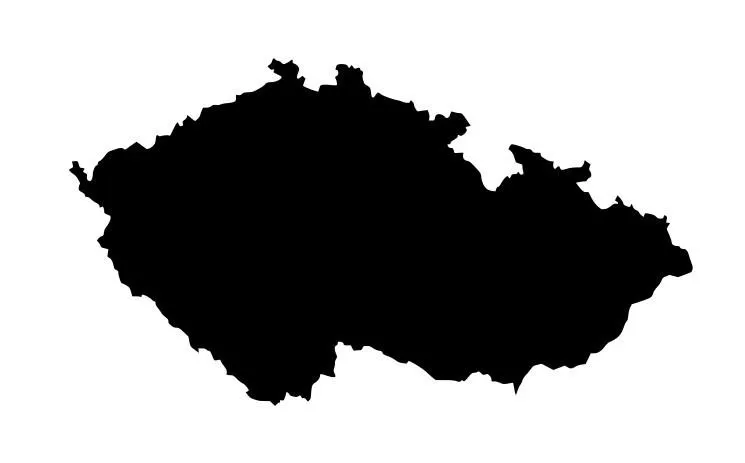
In a world filled with daily puzzle games, few have managed to combine education and entertainment as effectively as Worldle. While many players are familiar with word-based challenges, Worldle takes a completely different approach by transforming geography into an engaging puzzle experience. Instead of guessing letters or words, players are tasked with identifying a mystery country using only its silhouette and a series of clues based on proximity and direction.
What makes Worldle particularly fascinating is how it gradually teaches players to think like cartographers. Without requiring formal geography training, the game encourages users to visualize continents, estimate distances, understand regional relationships, and navigate the world map mentally. Through a clever combination of directional indicators and distance measurements, Worldle turns everyday players into amateur map experts.
If you haven’t experienced the challenge yet, you can play daily geography puzzles at TheWorldle.com, where players from around the world test their knowledge of countries, borders, and global geography.
The Genius Behind the Worldle Formula
At first glance, Worldle seems deceptively simple. Players are shown the outline of a mystery country and asked to guess its identity. However, the real innovation lies in the feedback system.
Rather than simply marking answers as right or wrong, the game provides:
- The distance between your guess and the correct country.
- A directional arrow pointing toward the target.
- A percentage indicating how close your guess is.
These clues transform every incorrect answer into valuable information. Instead of feeling punished for a wrong guess, players receive guidance that helps them move closer to the solution.
This design creates a satisfying balance between challenge and learning, making each puzzle feel like a miniature geography lesson.
Learning Through Distance
One of the most powerful educational tools in Worldle is the distance indicator.
When players guess a country, they immediately learn how far their selection is from the correct answer. A guess that is 8,000 kilometers away suggests that the player is likely on the wrong continent. A guess that is only 500 kilometers away indicates that they are getting close.
Over time, repeated exposure to these distances helps players develop a stronger understanding of the world’s geography.
For example, many people know that France and Germany are neighbors. However, fewer people can accurately estimate the distance between Portugal and Poland or between Egypt and Kenya. Worldle subtly teaches these spatial relationships through repeated gameplay.
As players continue solving puzzles, they begin building an internal understanding of global scale and regional proximity.
Why Directional Clues Matter
The directional arrows are arguably the game’s most brilliant feature.
Every incorrect guess points players toward the correct country using arrows such as:
- ↑ North
- ↓ South
- ← West
- → East
- ↗ Northeast
- ↘ Southeast
- ↙ Southwest
- ↖ Northwest
These simple indicators force players to think geographically rather than memorizing answers.
Imagine guessing Argentina and receiving a clue indicating that the target country is northeast. Instantly, a large portion of the world map can be eliminated. Players begin mentally navigating continents, considering neighboring regions, and adjusting their assumptions.
This process mirrors the work of real-world map reading and navigation. Instead of relying on GPS technology, players learn to orient themselves using relative positions and directional reasoning.
Building a Mental World Map
One reason Worldle has become so popular is that it naturally develops spatial awareness.
Traditional geography education often focuses on memorization. Students learn country names, capitals, and locations but may struggle to understand how those places relate to one another.
Worldle encourages a different approach.
Players gradually learn:
- Which countries share borders.
- The relative positions of continents.
- Regional groupings.
- Island locations.
- Geographic distances.
Over time, players begin constructing a mental map of the world.
This skill extends beyond the game itself. Many regular players report becoming better at identifying countries on maps, understanding international news, and recognizing geographic relationships that previously seemed confusing.
Turning Mistakes Into Progress
One of Worldle’s greatest strengths is how it rewards experimentation.
In many puzzle games, a wrong answer simply wastes a turn. In Worldle, every guess provides new information.
For example:
- A distance clue narrows the search area.
- A directional clue establishes a path.
- A proximity percentage measures progress.
This feedback loop creates a powerful learning environment.
Players are encouraged to make educated guesses, analyze the results, and adjust their strategy accordingly. The process resembles scientific problem-solving more than traditional gaming.
Each puzzle becomes an exercise in deduction, critical thinking, and geographic reasoning.
Geography Without Memorization
Many people assume they are “bad at geography” because they cannot instantly identify every country on a map.
Worldle challenges this assumption.
The game does not require encyclopedic knowledge. Instead, it rewards observation and logical thinking.
A player who knows only basic geography can often solve difficult puzzles by carefully interpreting clues. This accessibility is one of the reasons the game appeals to such a broad audience.
As players continue practicing, they naturally absorb geographic information without feeling like they are studying.
The learning happens organically through gameplay.
The Psychology Behind the Fun
Worldle succeeds because it taps into several psychological principles that make learning enjoyable.
Immediate Feedback
Players receive useful information after every guess, creating a continuous sense of progress.
Incremental Improvement
Each clue brings players closer to the answer, making success feel achievable.
Daily Challenge
The once-per-day puzzle format encourages regular participation and long-term engagement.
Curiosity
Every puzzle sparks a desire to learn more about unfamiliar countries and regions.
Together, these elements create an experience that is both educational and entertaining.
Why Geography Enthusiasts Love Worldle
For geography fans, Worldle offers an opportunity to apply existing knowledge in a meaningful way.
Players who already understand world geography can often solve puzzles quickly by combining silhouette recognition with directional clues.
However, even experienced players encounter challenging puzzles involving:
- Small island nations
- Landlocked countries
- Remote territories
- Lesser-known regions
This variety ensures that the game remains engaging regardless of skill level.
The challenge is not merely identifying countries but understanding how they fit into the larger geographic landscape.
Becoming a Better Cartographer Through Play
Cartographers are experts at understanding spatial relationships and representing geographic information visually.
While Worldle won’t turn players into professional mapmakers overnight, it does cultivate many of the same skills:
- Spatial reasoning
- Distance estimation
- Directional awareness
- Regional knowledge
- Geographic pattern recognition
These abilities develop naturally through repeated gameplay.
What begins as a simple guessing game gradually becomes a sophisticated exercise in geographic thinking.
Final Thoughts
Worldle stands out among modern puzzle games because it transforms geography into an interactive learning experience. By using proximity percentages, directional arrows, and distance measurements, the game teaches players to think like explorers, navigators, and cartographers.
Every puzzle encourages deeper understanding of the world map while rewarding logical deduction and curiosity. Whether you’re a geography enthusiast or someone who simply enjoys daily challenges, Worldle offers a unique opportunity to sharpen your spatial thinking skills while having fun.
Ready to test your map knowledge? Visit TheWorldle.com and discover how proximity and direction can transform the way you see the world.